A long-term owner for cross-border supply-chain businesses.
After more than a decade building and leading cross-border operations, I am now looking to acquire one strong business, work closely with its established leadership, protect what already works, and grow it for the long term. The search begins with U.S. customs brokerage and closely related cross-border trade services.
The operator
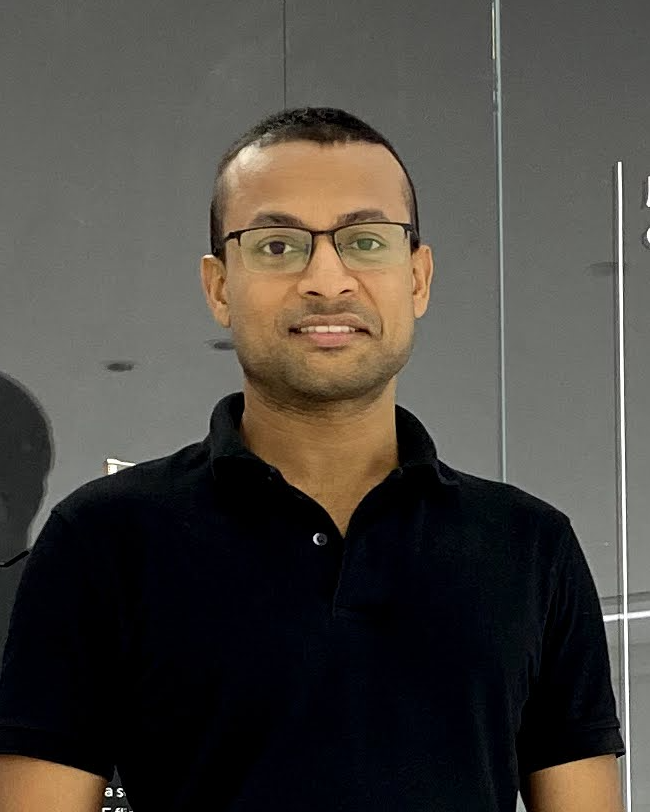
More than a decade of international operating experience.
I am Rajan Devnath. I have spent more than a decade building and leading international operations across Asia and North America, including cross-border logistics, fulfillment, freight, warehousing, and customs. I am drawn to operationally complex environments where many moving parts, tight handoffs, and customer trust all have to work together.
I launched and scaled a fulfillment center and air-freight network from Shenzhen, China, serving the United States and more than 20 countries. Starting from zero, I helped scale the business to a revenue run rate of more than $120 million and built a 60-plus-person operations organization across China and the United States.
Following the removal of U.S. de minimis treatment, I helped transition operations to T01 and T11 customs pathways while maintaining service levels. By improving entry data quality, classification discipline, and inbound routing, we reduced CBP inspection rates from a range of roughly 15 to 20 percent to approximately 5 percent. This is the operating context I bring to Radius: direct experience with the pressures importers face and the responsibility a brokerage carries for its customers.
I am based in Toronto and work across North America and Asia.
- Customs operations: T01 and T11 entry pathways, airfreight injection through JFK, ORD, and LAX, inbound routing, HTS strategy, and CBP inspection reduction
- Cross-border scale: teams and systems operating across more than 20 countries
- Operating leadership: multi-country teams spanning logistics, customs, and fulfillment
Selected experience
The search
What I am looking for.
I am looking for a strong, established business to own and grow for the long term, working alongside an experienced operating leader. Customs brokerage is the focus, with closely related cross-border trade services also in scope.
- Sector
- U.S. customs brokerage
- Size
- $500K–$2.5M normalized EBITDA
- Capital
- I will invest meaningful personal capital alongside conventional acquisition financing, seller financing, and deal-specific investor equity where appropriate.
- Demand
- Recurring B2B demand from a diversified base of importers, with limited customer concentration.
- Books
- Clean financials and revenue that is straightforward to explain.
- Owner
- Founder-led or family-owned, with an owner considering succession, retirement, or a phased handover.
- Continuity
- Key employees and licensed brokers who can support customer relationships, compliance, and day-to-day continuity.
- Geography
- U.S.-based, with a preference for businesses serving importers with meaningful international flows.
If you are a broker or advisor, this is the buy box. Relevant introductions are always welcome.
The starting point
Why customs brokerage.
Customs brokerage is a trust-based, compliance-heavy business built on long-standing importer relationships and recurring import activity. It rewards exactly what I care about: process discipline, reliability, and looking after customers over years, not quarters.
Importers also rely on freight, warehousing, fulfillment, and trade support, areas I have worked in throughout my career. Over time, I would consider adjacent services only where they strengthen the brokerage and are useful to its customers.
Continuity
What happens after a sale.
A good business is more than its numbers. It is employees who know the work, customers who trust the company, and a reputation built over years. I treat that continuity as the asset, not an obstacle.
- Protect customer relationships Client transition is planned carefully and handled with the seller's help where useful.
- Retain and support the team The people who understand the customers and the workflow are usually why the business is worth buying.
- Preserve what already works The first job after closing is to learn the business, not to remake it.
- Improve carefully, not for show Better reporting, systems, and processes, sequenced sensibly, never change for its own sake.
- Be direct and responsive If it is not a fit, you will hear that early. Your time is respected throughout.
Straight answers
Questions owners usually ask.
Will my team be protected?
My intention is to retain and support the team. The people who know the customers, workflows, and details are usually why the business is valuable, and I am looking for a team that can keep growing with the business.
Will my employees or customers find out before anything is final?
No. Early conversations stay between us. Nothing is shared with your team, customers, or competitors before you are ready, and any detailed financial or operational information is only exchanged after an NDA is in place.
Will you invest your own capital?
I will invest my own capital in the acquisition and expect to combine it with prudent acquisition debt and, where appropriate, seller financing or deal-specific outside equity. The goal is a structure that supports a clean close and the business's long-term health.
How involved will you be after closing?
My plan is to personally lead the business, work closely with the existing team, and learn its customers and processes before making changes. I am looking for a business where that level of involvement is useful.
How long do you need me to stay involved after closing?
Typically three to six months in an advisory capacity, enough to transfer relationships and institutional knowledge properly. The exact arrangement is worked out with you as part of the deal, not imposed after the fact.
What happens to customer relationships as an owner steps back?
Customer transition is one of the most important parts of diligence and deal structure. I favor thoughtful handover plans, seller involvement where it helps, and terms that align both sides around keeping customers.
How will license and permit continuity be handled?
License and permit continuity is a core diligence issue. Under CBP regulations, a brokerage's license stays valid as long as a validly licensed U.S. officer maintains responsible supervision and control, regardless of where ownership sits. I am looking for businesses with licensed broker officers and qualified employees who can carry that forward, and I would plan the ownership and officer structure with the seller and licensed team well before closing.
Will this drag on for months?
I aim to be clear early. If the business is not a fit, the answer comes quickly. If it is, the path is straightforward: a first conversation, an NDA and review, a letter of intent, confirmatory diligence, and a practical transition, typically about three months from first conversation to close.
Will everything change immediately?
No. Improvements should be practical and sequenced, made after I understand the business, not imposed on day one for appearance.
The process
A straightforward path.
- A confidential conversationA private call to understand you, the business, and your goals for a transition.
- Mutual fitAn honest look at size, profile, customers, team, and what you want from the outcome.
- NDA and initial reviewA high-level look at financials, customer mix, team, and operations.
- Letter of intentA clear proposal on valuation, structure, transition, and timeline.
- Diligence and transitionConfirmatory review, then a practical handover focused on people, customers, and continuity.
Have a business to discuss?
If you own or advise a cross-border supply-chain business considering its next chapter, I would be glad to talk. Conversations are confidential, and no prepared materials are needed for a first conversation. Not actively selling? An exploratory conversation is still welcome.
Email Rajan directlyCapital partners are also welcome to reach out directly.